Monday, February 17, 2014

Blog Post #23: Week of Feb. 10-14 Reflection

Last week, we swiftly wrapped up our tragic hero unit with our poster presentations. These went very well and they were very interesting and well done. I particularly liked the Alex Supertramp poster from the movie Into the Wild. This group did a great job of decorating their poster and adding symbols and meaningful items. For example, they wrote the hero's name in twigs, and had flowers around this. These items make the audience feel the wildness of the movie and lack of society that is the premise. I liked these presentations and I think they helped me get a very firm grasp of the topic that I would not have gained unless exposed to this many examples.


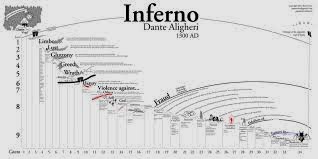
On Thursday, we shifted gears and focused on another very dark topic: hell. We will be studying Dante in the following weeks and his in depth description of the nine levels of hell. This includes who can be placed there, and what punishments are included in the package. Looking at a map of Dante's Inferno, some of the punishments are very gruesome and terrifying. For example, I would hate to have to live eternally in a pit of boiling tar and pitch, with flying demons hooking me with sharp barbs. This will be an interesting topic and although it is very dark, I hope to gain something out of it, as I'm sure I will.

Thursday, February 13, 2014

Blog Post #21: Personal Hell

The first question on the assignment page is: What is hell? Before I can answer this, there are many interpretations I can take. The first is the hypothetical idea of hell that is traditionally thought of in the Christian faith. This direction leads me to think of it as a fire-filled place underneath the Earth where every second is agony and torturous. The devil roams and instills fear and pain in unimaginable magnitudes. My personal hell leads my onto a completely different thought line. While equally as torturous, my hell has no fire or devil. It is bare and enclosed, with no one around and no noise. I am pitifully alone and hate every second of it. Meanwhile, a sideshow in my head instills fear into my mind with memories of all the pain I have gone through, to make me feel it all over again. I become very vain in my hell, and I can't help but think that there are others that think bad things of me, and consequently make me feel terrible. This mental torture seems to have no escape or reprieve.


1. My hell is a punishment, as could be expected. It is a punishment for the bad things I have done or not done. My hell can come at any point, really, and is not restricted to the afterlife or any such thing. Whenever I feel really bad about something I can sink to hell, and it is awful. This is usually a result of self-criticism, and an I-hate-myself felling. These feelings are not merited but yet something in me brings about this personal hell.

2. The punishments of my hell are many different methods of mental torture. In my hell, the mental aspect of life trumps the physical aspect, and so no cuts, bruises, or breaks befall me. I am tortured by my own mind, telling me that I am worthless and pointing out all my flaws. And I believe it for some reason. My mind resembles that of a dreaming mind, where anything that comes along, inextricable as it may be, is not only believable, but completely accepted as fact. All my mistakes are flashed on the walls of the box I am trapped in as some kind of subliminal messaging, and its purpose is to convince me of my infinite inferiority.

3. My hell is white, and lonely. It may be one of those cells used in insane asylums. The ones with padded walls and no windows. This means there is no emotion going out to others, which I believe is the reason for emotions in the first place. It is all coming back to me, and they are negative in nature, wearing my defenses down and making me unstable, and insane. Pictures and scenes are displayed on the walls as in a slideshow presentation, but there is no projector. These scenes tear at me with their sharp claws of self-deprecation, giving me no rest or rescue.


4. There seems to be no end to my hell. There is no escape, at least for me. But that is the point of a personal hell. It is meant to be the worst-case scenario, the most terrible situation imaginable by that specific person. If someone else were placed in my hell, that person might have a chance of escaping, by denying the attempts of the pictures to gnaw at his or her mental stability. I don't think any one's personal hell should be escapable, and if it is, it is not their true hell.

5. A symbol for my hell could be a straightjacket. I am restrained in my hell and have to take whatever it throws at me. I can't get out of it and, although not claustrophobic in the real world, I freak out in my hell trying to get free. But these attempts are futile. Everything is futile in hell. The idea of being restrained or having no options generally scares me, and the straightjacket would be perfect to terrify me in my hell.


6. Absolutely no one is in my hell. That, for me, is worse than having a devil or person I dislike. There may be ghosts or ethereal wisps of people I love, though. This is because they are not really there but they would be noticeable and torturing. I would more than anything want to talk to them, or to hug them, but it would be impossible. Humans were made to group together and form communities, as we have been doing for all of time, so being alone goes against human nature and is complete misery. That is why it is intrinsic to my hell.

Monday, February 10, 2014

Blog Post #20: Reflection on Week of Feb. 3-7

Unfortunately, I was terribly sick four of the five days this past week, and was not able to join my classmates in 7th period LA. I know, though, that we worked on our tragic hero posters most of the time. I was in school on plan day so I am excited about our poster and I think it will turn out quite well. We have incorporated many of the many symbols from the movie into our poster. We have the name of our hero written in electricity, as this is the main attraction of the magician's act that leads him down his terrible path. We also have a ball that bounces down on our pictures that represents his tragic fall. This also signifies his tragic flaw, which is obsession, and jealousy.


The next step in this project is the inevitable presentation. We started this on Friday and will continue this week. I am not all that concerned with this part of the assignment because I enjoy relaying my knowledge and explaining something others may not know. This was a really cool and interesting movie (The Prestige) and I have a want to present so that others may become interested in it as well. I have enjoyed the presentations so far and, like I wish to do, I have become interested in some of the films and will now seek to watch them. All the posters look very well-done an artistic. I think our class worked very hard on these projects and it looks as though our work has paid off.

Monday, February 3, 2014

Reflection Week of Jan. 27-31: Post #19

This passed week we were introduced to the classifications of Aristotelian tragedy, and then moved on to our projects with an example of a tragic hero. The first two days we were tasked to listening and paying attention. We listened to Aristotle's calculated break-down of every part of a tragedy, and then watched gloomily a mash-up of all the terrible parts of the Titanic, bringing the class to an unhealthy state of depression. But nevertheless, this mash-up breezed over all the intrinsic aspects of a tragedy in a condensed amount of time so that they cemented into my mind very effectively. This is important because we were then assigned the project, where we have to mash-up the intrinsic properties of a tragedy of our choice not in a video, but a poster.


The two days we had dedicated for projects were very fruitful. I feel like my group were smart and planned most everything out before we even got the black sheet that would be our final canvas. I am excited to see how it turns out in the end because we have a very good idea and many powerful symbols that relate effectively to our film, The Prestige. This film is definitely a tragedy and throughout the entire two hour 15 minute span, the audience does not know who to root for or who is the "good guy" or the bad guy. It is a very interesting, brilliant movie, and I hope to capture its essence in my final poster.

Monday, January 27, 2014

Week of Jan. 20 - 24 Reflection: Post # 18

This passed week, we were focused primarily on Oedipus Rex. It was a relatively boring week, as we read silently in class on Monday and Tuesday. The tragic play opened my eyes a bit, and made me think of the intricacies of life and fate. Oedipus, throughout the play, tried so hard to avoid his inevitable fate, yet what he thought was right only led him straight into his worst nightmare. This exemplifies the fact that every small decision affects the life of not only yourself, but many around you as well. Applying this revelation to my life, it made me take decisions much more seriously than I ever had before. Even when I returned home I contemplated the choice of drink I would get, weighing the pros and cons and long-term consequences each choice might have. The play also told the audience that fate was predetermined, and there was no escaping it. In the modern world, this is not widely accepted, and I do not believe in this as well. I do believe that my decisions have a long-term effect on my life, though, and now I won't trivialize any decisions any longer.

On Friday, we had finished the play and we moved on to our eventual project on this subject matter. Our amazing and loving teacher Mrs. Cawlfield spent the day talking to the attentive and sponge-like minds of the students about Aristotelian tragedies and what defines a tragic hero specifically. As sponge-like minds do, we absorbed every word she was saying and might have even taken diligent notes. We would do this because we have to come up with a perfect example of a tragic hero from a film and apply it to the Aristotelian model while also comparing it to the character of Oedipus. I assume we will do incredible work with absolutely no flaws whatsoever and all get amazingly great grades. We will work on this project this week and it's probably going to suck. But maybe not!!


Monday, January 20, 2014

Week Reflection: Post #17

This week, we unfortunately had to wake up from our honeymoon period of returning to school after our long, cushy break. We finished the transcendent movie Baraka, and wrote a reflective mini-essay on it. The film was very intriguing and imaginative, breaking the mold of what humans think about this world. Personally, it changed my views quite a bit, and showed me the immense range of humans and cultures we have on Earth. The ignorance of this fact, though, is what the filmmakers were trying to get across. They were saying how the metropolitan areas of the world of today have lost any decency or compassion it once had, and this has been replaced by cruelty and war.
Following the movie, we quickly transitioned into our new topic, the tragic play Oedipus Rex, by Sophocles. We were forced to do a good amount of research that surrounds this topic, and although it was very arduous and overall annoying, I do believe it allowed for a more smooth reading experience and greater understanding of the play. At the end of the week, we started actually reading the play, after days of anticipation and research. I have enjoyed it so far, and can definitely feel the dramatic irony forced upon the readers by Sophocles. I look forward to reading it more and hopefully it doesn't end in tragedy... :) I'm not too confident with that, though...


Thursday, January 16, 2014

Oedipus Rex Background Information -- Post #16

Oedipus Rex
Man:
The myth of Oedipus is ancient, and has been passed along for thousands of years. After this long, it is impossible to tell is Oedipus ever actually lived, or if his story is simply myth. If it was just a myth, it was probably told to stress the power of the gods and the Fates. The Fates made it so no one could ever run away from their destiny, and Oedipus tried to, but ended up falling right into their "trap."

Play:
The play Oedipus Rex, written by Sophocles, takes place completely after the myth. Oedipus has been married to his mother for 20 years and is ruling over his city. He has some kids with his mother, as well. As I have not read the play, I cannot discuss plot as of yet, but I look forward to reading it.

Myth:
Oedipus was the son of the king and queen of Thebes. He was given a prophecy that he would kill his father and marry his mother, so the king gives the baby to a poor man who is to dispose of the infant, but he takes pity on it and simply sends it to the neighboring city of Corinth, where the king and queen there take Oedipus in as their own. Once Oedipus becomes a young man, he hears his prophecy again and runs away from Corinth, trying to spare his adoptive parents. He encounters a man, his father, on the road to Thebes and kills him over an altercation, and then kills the dragon attacking Thebes, for which his prize is the widowed queen, his mother.


Sophocles
Sophocles was born in 496 BCE in Colonus, a village outside of Athens. He was very successful and skilled. He had a warrior's physique and was very good with war, music and poetry. He was very tied to Athens, serving as one of the commanders of the armed forces, and later as a financial consultant.


Aristotle
Aristotle is the last of the three Greek Philosophers, the other two being Socrates and Plato. He is said to have written 150 treatises in his 62-year life from 384-322 BCE. He had a great education and went to study under Plato when he was about 17, and was a brilliant student there. He made huge contributions to modern science by studying natural phenomena like earthquakes.


Tragedy:
Aristotle studies many topics, including the arts, and plays. He classified the type of play known as tragedy, and laid out specific things that always occur within these kinds of plays. He says that the order of events, the plot, must be complete with a beginning middle and end and a good cast of characters to support the different aspects of the plot (fear, joy, pity, drama, etc.) He also says the protagonist should be in the upper class and prosperous in order for his fall from grace to be more obviously and sad.
Aristotle's ideal plot structure. Copied by Freytag centuries later.


Hubris:
Hubris is the extreme pride or arrogance of a person. It is a greek word used a lot in greek tragedies, as hubris, according to Aristotle, is a hero's biggest flaw. He also says that it will get the hero killed and/or lead to his ultimate demise. Furthermore, this is how Aristotle classifies a tragic hero, because all tragic heroes have this deadly flaw.


Dramatic Irony
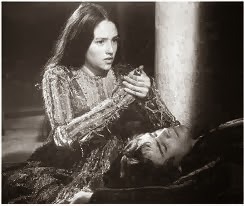
Dramatic Irony is a popular use of plot in tragedies, as in Romeo and Juliet. This idea occurs when the audience is aware of something important that one or more characters do not. This is supposed to fill the audience with anxiety, fear and frustration as the play progresses. This technique originated in Greece, and is very old and very effective.


Tiresias
Tiresias was a child of a man and a nymph, in Greek mythology. He served as a prophet of Apollo in Thebes for seven generations. He has many misadventures with the gods, including getting turned into a women for several years by Hera, and getting blinded by Athena. He also is featured in Oedipus Rex when he is called to give information about the king's killer.


Fate
In Ancient Greece, fate played a huge role in everyone's lives. They believed that their fate was set and it was unavoidable, yet many characters throughout Greece's history attempted to do so, and failed. This include Oedipus, when he runs away from his fake parents and runs right into his real parents where he fulfills his fate. Greeks had gods/spirits that determine the fates of people aptly called The Fates, who controlled the lives of people to an extent and cutting a string at the end of one's life.


Greek Theater
In Ancient Greece, plays were preformed in an amphitheater outdoors. They were designed very well and spectators in the very back row could here as well as the front-row viewers, without the use of microphones or any amplifier whatsoever. Performances were a public event, and everyone was allowed to see the plays. Many of the plays of the time were about myth and religion, teaching the powers of the gods and teaching of human flaws and tragic heroes, like Oedipus.