Thursday, January 16, 2014

Oedipus Rex Background Information -- Post #16

Oedipus Rex
Man:
The myth of Oedipus is ancient, and has been passed along for thousands of years. After this long, it is impossible to tell is Oedipus ever actually lived, or if his story is simply myth. If it was just a myth, it was probably told to stress the power of the gods and the Fates. The Fates made it so no one could ever run away from their destiny, and Oedipus tried to, but ended up falling right into their "trap."

Play:
The play Oedipus Rex, written by Sophocles, takes place completely after the myth. Oedipus has been married to his mother for 20 years and is ruling over his city. He has some kids with his mother, as well. As I have not read the play, I cannot discuss plot as of yet, but I look forward to reading it.

Myth:
Oedipus was the son of the king and queen of Thebes. He was given a prophecy that he would kill his father and marry his mother, so the king gives the baby to a poor man who is to dispose of the infant, but he takes pity on it and simply sends it to the neighboring city of Corinth, where the king and queen there take Oedipus in as their own. Once Oedipus becomes a young man, he hears his prophecy again and runs away from Corinth, trying to spare his adoptive parents. He encounters a man, his father, on the road to Thebes and kills him over an altercation, and then kills the dragon attacking Thebes, for which his prize is the widowed queen, his mother.


Sophocles
Sophocles was born in 496 BCE in Colonus, a village outside of Athens. He was very successful and skilled. He had a warrior's physique and was very good with war, music and poetry. He was very tied to Athens, serving as one of the commanders of the armed forces, and later as a financial consultant.


Aristotle
Aristotle is the last of the three Greek Philosophers, the other two being Socrates and Plato. He is said to have written 150 treatises in his 62-year life from 384-322 BCE. He had a great education and went to study under Plato when he was about 17, and was a brilliant student there. He made huge contributions to modern science by studying natural phenomena like earthquakes.


Tragedy:
Aristotle studies many topics, including the arts, and plays. He classified the type of play known as tragedy, and laid out specific things that always occur within these kinds of plays. He says that the order of events, the plot, must be complete with a beginning middle and end and a good cast of characters to support the different aspects of the plot (fear, joy, pity, drama, etc.) He also says the protagonist should be in the upper class and prosperous in order for his fall from grace to be more obviously and sad.
Aristotle's ideal plot structure. Copied by Freytag centuries later.


Hubris:
Hubris is the extreme pride or arrogance of a person. It is a greek word used a lot in greek tragedies, as hubris, according to Aristotle, is a hero's biggest flaw. He also says that it will get the hero killed and/or lead to his ultimate demise. Furthermore, this is how Aristotle classifies a tragic hero, because all tragic heroes have this deadly flaw.


Dramatic Irony
Dramatic Irony is a popular use of plot in tragedies, as in Romeo and Juliet. This idea occurs when the audience is aware of something important that one or more characters do not. This is supposed to fill the audience with anxiety, fear and frustration as the play progresses. This technique originated in Greece, and is very old and very effective.


Tiresias
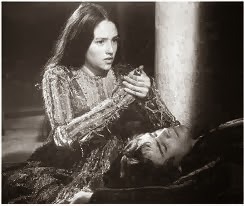
Tiresias was a child of a man and a nymph, in Greek mythology. He served as a prophet of Apollo in Thebes for seven generations. He has many misadventures with the gods, including getting turned into a women for several years by Hera, and getting blinded by Athena. He also is featured in Oedipus Rex when he is called to give information about the king's killer.


Fate
In Ancient Greece, fate played a huge role in everyone's lives. They believed that their fate was set and it was unavoidable, yet many characters throughout Greece's history attempted to do so, and failed. This include Oedipus, when he runs away from his fake parents and runs right into his real parents where he fulfills his fate. Greeks had gods/spirits that determine the fates of people aptly called The Fates, who controlled the lives of people to an extent and cutting a string at the end of one's life.


Greek Theater
In Ancient Greece, plays were preformed in an amphitheater outdoors. They were designed very well and spectators in the very back row could here as well as the front-row viewers, without the use of microphones or any amplifier whatsoever. Performances were a public event, and everyone was allowed to see the plays. Many of the plays of the time were about myth and religion, teaching the powers of the gods and teaching of human flaws and tragic heroes, like Oedipus.


Monday, January 13, 2014

Baraka Reflection -- Post #15

The world of advancement and making money is moving much faster than any time before, and is continuously getting ever faster. The rich countries of Western learning and achievement have no use for religion, faith or compassion, and so don't include it into their societies or daily life. Baraka is trying to bring to light this problem, and show the world its huge mistake. Baraka is a non-narrative film that conveys thoughts on a deeper level than most usually see, and so some cannot understand its message. Its filmography, musicology, and symbolism all play a part in its message,  and it is made brilliantly and though-provokingly.

Baraka has some amazing shots of many different aspects of the world. It shows mountains, spires, animal  life, cloud movement and an eclipse. All these shots evoke a feeling of wonder and it speaks to humans that the world is so much bigger than themselves. Humans cannot control these aspects of life and the unknown forces that do control this is what brings out the awe and amazement. Baraka also touches on the many different levels of society across the world. It travels from desert nomads in Africa to simple hunter-gatherers in Polynesia, and from the populated streets of Tokyo to the bustling city of New York. There are so many varying types of life on Earth and so much, yet so little separates them. The filmmakers of this project strongly emphasized faith and religion throughout the many scenes. And although the peoples may look, dress, act, live differently, they often share many things as well. Baraka showed many religious rituals and ceremonies from Muslim prayer at the Kaaba, to a circle chant group someone in a rainforest. Even though these groups evolved separately, they naturally form religion and faith. Also in the film, Baraka takes its viewers to see the negatives of the world, which include war allusions, a concentration camp, burning oil fields, a fighter plane cemetery, the sorting of baby chickens, and others. The allusions to violence and conflict in the world make the audience feel very disappointed. After the tranquil scenes of religion and beauty, the destruction of the modern world evokes strong emotions. It makes us feel regret and the need to resolve these differences and unite under a common good. Mary Ann Brussat has some of these same ideas, and her most impactful scenes coincide with mine for the most part.

The way the film was shot has a huge effect on how the film is perceived by the viewers. In Baraka the filmmakers use a multitude of techniques that evoke strong responses. One of the way is the close-up of a face. This increases the viewers' intimacy with the subject and allows for them to relate to what their life might be like. Another technique is a time lapse. They use this for the cloud movement, and the busy streets of New York City and Tokyo. This gives the audience a sense of time and repetition over time, as the same monotonous thing happens in the modern world of metropolises. The nature shots used in the film are very important to set the background of the people living on this Earth. It has a humbling effect, and makes for a great transition to life around the world. Also, the music played over the scenes is very important as well. Music definitely brings out certain emotions within a person. At the start of the film, the music is very tranquil and peaceful, because that is how the people of primitivity live. It endears these tribal people to the audience. In contrast, the music whilst the modern shots are showing is more foreboding and unsettling.

Overall, Baraka was an incredible journey through the world, showing the audience the many differences, but most importantly the similarities between the plethora of societies and peoples scattering the surface of the Earth. It is an important lens through which humans should view our planet and our species. Compassion and faith are for the most part lost in the modern world of business and money. But this is not the best way of living for humans as a whole. This idea of the film relates to world literature in the way that it is very cosmopolitan, meaning it is in touch with many different cultures and is relaying the lessons and ideas back to the rest of the world.


Saturday, December 21, 2013

Blog Post #13: LOTF Reflection

I enjoyed Lord of the Flies ver much. I thought it was very interesting and thought-provoking. For me, it was fun to tie the allegorical symbols back to the real world and understand the context Golding was writing in. The book was quite depressing in many ways, because the symbol of innocence in our world, children, were being corrupted by savagery and falling into such inhumane practices. This doesn't make the readers think very well of the characters, but it is very relevant to the world as Golding was trying to express. I thought the end of the book was very interesting, as well. The boys don't seem overly excited to be rescued, and this is probably because their lives have been forever marred by the truths of what humans are at heart and are capable of. There was irony here, too, because the kids are leaving their world of war and savagery and re-entering another one, where the death tolls are a lot higher and the suffering levels are off the charts. Overall, the book was a good thing to study in our class, and the darkness of the book matched the darkness of wintertime that we were reading it in. I enjoyed the unit and the messages and morals I took in while reading the novel.


Wednesday, December 18, 2013

Blog Post #14: Semester Reflection

I think this semester when fairly well in this class. I thought it was very challenging, but also very thought-provoking and thoroughly interesting. I enjoyed reading Swift and learning about satire. I found Golding's Lord of the Flies to be a very good read and discussion topic in class. And even though this may sound crazy, I enjoyed writing the Lord of the Flies paper at the end of the unit. I felt that I learned even more trying to put my thoughts down on paper than just discussing. There are so many levels and ideas that can float around during a discussion, it is very hard to keep track of them all. I liked organizing these ideas, metaphors, and symbols because I gained a greater understanding of the book overall.

I also look forward to next semester's challenges and topics. I hope, of course, it becomes an easy class, but I know that will not happen and I will have to work. But I prepared to do so and will hopefully have fun engaging in the deep and profound topics we delve into.

Monday, November 18, 2013

Blog Post #12

Nov. 18th 2013
Analyze the interaction between Simon and the Lord of the Flies at the end of chapter 8.

The Lord of the Flies is a reference, as we know, to the Devil. Also, Simon has been previously described as a religious figure, the keeper of faith and hope. So this interaction is therefore a conversation between good and evil, God and the Devil. And the Devil is winning. He targets Simon's vanity and self-consciousness by calling him a silly little boy and asking him if he wants Ralph to think him batty. He also targets his fear, as he is a pig's head on a stick covered in flies. The Lord of the Flies continues the one-sided conversation by saying that he is the Beast, and it has been in Simon, in humans.
The repetition in this section cannot be missed. The Lord of the Flies uses silly little boy, and poor misguided boy multiple times throughout, and is trying to make Simon feel subservient and helpless. Golding also repeats how the Lord of the Flies is expanding; it was expanding like a balloon; it was a darkness that spread. The darkness is taking over Simon, the person most faithful and hopeful boy on the island. this speaks to its power and its dangerousness to the boys on the island and thus humans in the world.

Friday, November 8, 2013

Blog Post #11

Journal #11: Nov. 8, 2013

Free Write


So far, I have enjoyed reading Lord of the Flies. It is interesting and deep, and it is a good example of allegory and symbolism. I especially like the in-class conversations about the chapters we read. For me, it helps me understand the book, and all its complexity. Recently, though, we have been doing only the written paragraphs. I don’t like this as much, because I don’t know if I will ever find out if what I write was actually relevant at all. I am looking forward to reading the rest of the book, and am excited to see what happens to the kids on the island, because at this point, they are in political and social turmoil.


Sunday, November 3, 2013

Post #10

Journal 9: Oct. 31, 2013

Select one character from chapter one and write about him in detail. Use two citations in your description. Write at least 8 sentences.

I choose Piggy. Piggy is a chubby kid with glasses. His age has yet to be directly stated, but it can be inferred that he is around the age of Ralph, which is 12. Piggy is a kind person, and he immediately tries to get to know Ralph and the other kids who show up later. This tells me that he is wise, as no one will survive the island alone, so he is trying to make ties and friends to increase his chances of survival. Piggy is also a cautious person. “Piggy took off his shoes and socks, arranged them carefully on the ledge, and tested the water with his toe” (Golding 11). I think Piggy is this way partly because both of his parents have dies, and Piggy is more aware than the others about how cruel the world is. He had to grow up earlier than most, and while Ralph is more reckless, Piggy has to stand back and measure the situation. Piggy is also a target for bullying on the island. “‘You’re talking too much,’ said Jack Merridew. ‘Shut up, Fatty’” (Golding 20). Even though Piggy is just trying to be friendly, the others are quite mean to him. Piggy knows he has to stay with this group, though, so he weathers the storm, and utilizes his tick of cleaning his glasses whenever he is embarrassed to hide his humiliation.